
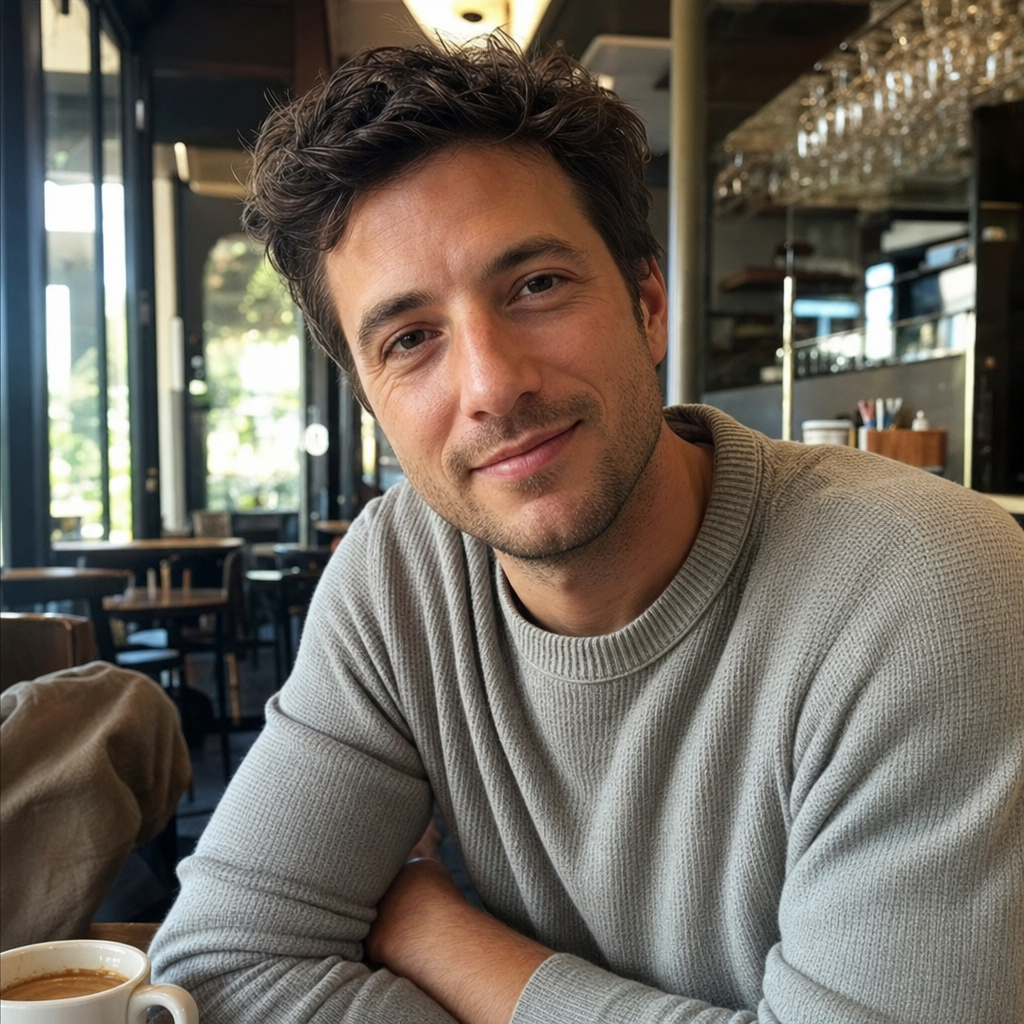
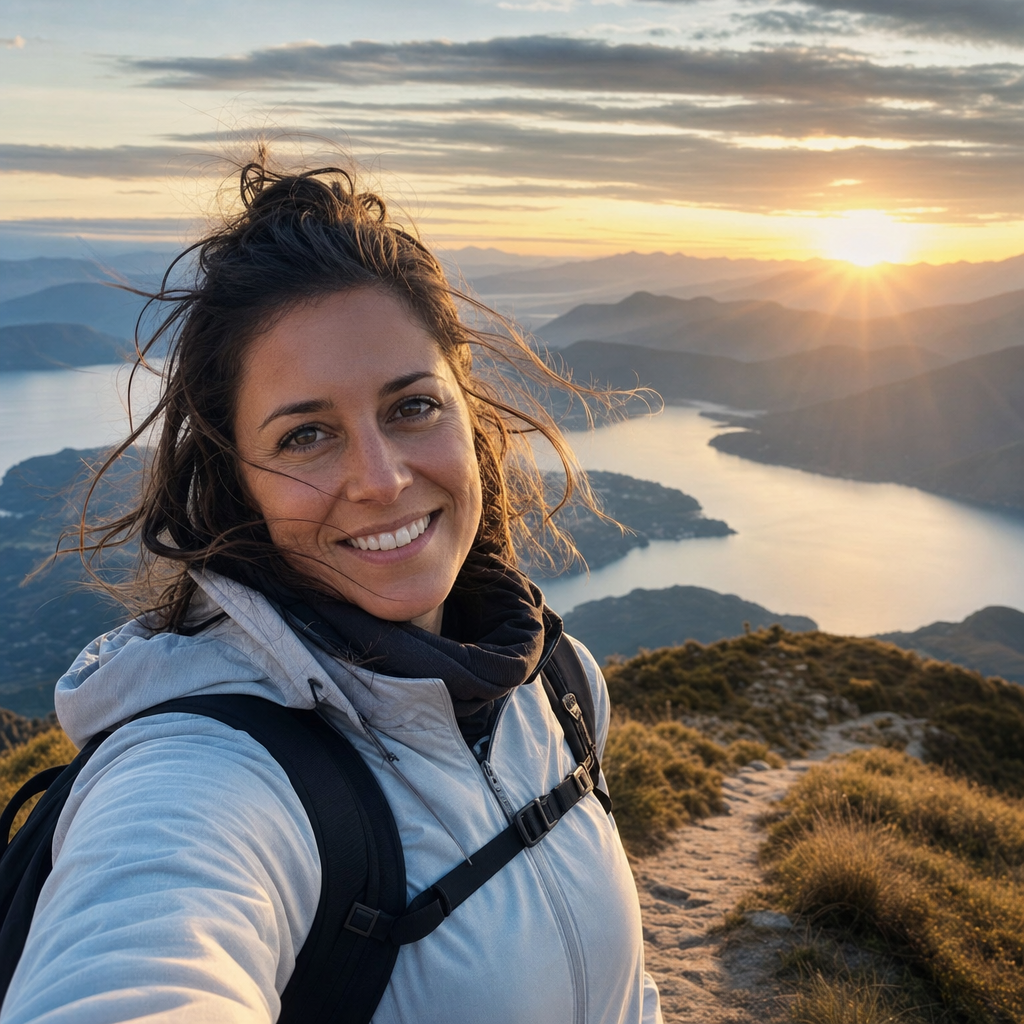
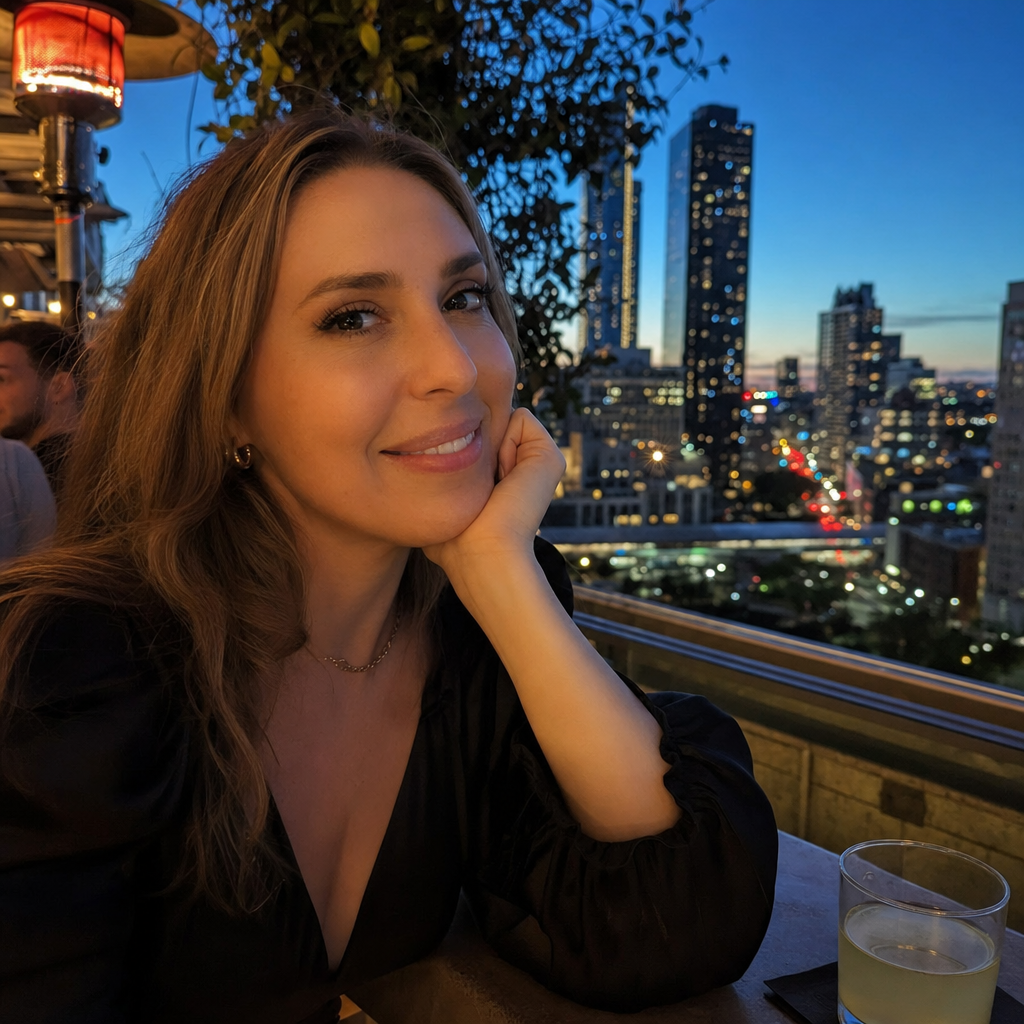
Tinder Night-Out Profile Photo
Tinder night-out photos that fit the going-out tempo of the platform — without finding a friend at a bar with a camera. The Night Out variant takes a real photo of you and re-renders it against the urban evening backdrops Tinder profiles tend to lean on: a rooftop bar with skyline behind you, a city street softened by bokeh from streetlights and storefronts, a candlelit booth in a dimly-lit restaurant, the entrance of somewhere with good ambient warmth. The lighting tone shifts to evening warm — tungsten, candlelight, soft string lights — and the outfit reads as one notch dressier than the everyday casual register. Your face stays exactly your face: facial structure, ethnicity, age, gender, all preserved. The photo just looks like it was taken on a Friday night rather than a Tuesday afternoon.
Tinder skews younger and going-out — the social-life signal does heavier lifting on Tinder profiles than on Hinge or Bumble. Profiles dominated by indoor selfies and outdoor active shots can still come across as solitary if there is no photo that reads as evening or social. Night Out fills that gap from any source photo, including a flat indoor selfie. It also works on Bumble and Hinge as the third or fourth photo when you want to round out the personality the lineup is communicating.
What the Night Out variant produces, specifically: an upper-body framing with an evening urban environment, warm artificial lighting (tungsten, candle, soft string-light bokeh, occasional neon accent), a wardrobe rendered as one step up from casual — a fitted button-up, a knit sweater, a soft blazer over a t-shirt, a dressier jacket — and a background that reads as a real evening location rather than a heavy-filtered nightclub stock blur. The bokeh is soft, the contrast is warm, the rendering avoids the over-saturated influencer-restaurant-feed look in favor of something that feels like a moment you would actually be in.
Night Out works best as the third or fourth photo in a Tinder, Bumble, or Hinge lineup. As a primary photo it can read as trying too hard; as a third photo paired with a Casual primary and an Adventurous secondary, it adds a complete dimension — you live a normal life, you have hobbies, you also go out. That story is what makes a profile feel like a real person.
How it works
- Upload your photo— A clear photo of you works regardless of lighting in the source — the variant handles the conversion to evening warm. The enhancer reads your face, expression, and body shape from the source, then re-renders the urban evening environment around you. Files stay private and auto-delete after 24 hours.
- Pick a variant— You are on Night Out — the Tinder-leaning evening urban register. The example tile shows the framing and warm artificial light. Pick Casual instead for the Hinge indoor-warm register, or Adventurous for the Bumble outdoor active register.
- Iterate to refine— First preview drops in seconds. Try again advances quality and explores a different evening setting within the variant's range — sometimes a rooftop with skyline, sometimes a candlelit booth, sometimes a city street with soft bokeh. Iteration is included in a single generation.
- Download HD— Once the preview reads as a real evening moment rather than a staged shoot, click Looks good. We render the final at full resolution and return a signed download link sized for Tinder, Hinge, Bumble, or any dating app upload.
Use cases
Tinder photo for a night-out theme
Tinder profiles lean on social-life signals more than Bumble or Hinge. The Night Out variant produces the rooftop or candlelit frame that fits the going-out tempo of the platform — without misrepresenting an evening you didn't have.
City-living signal for an urban-leaning profile
If your dating audience is concentrated in a city — Tinder in NYC, Bumble in LA, Hinge in Chicago — a photo that reads as urban evening lands harder than a generic outdoor shot. The variant produces that photo without leaving your apartment.
Third or fourth photo on a Bumble or Hinge lineup
A Bumble or Hinge profile with only daytime photos is incomplete. Night Out adds the evening dimension that signals a social life and rounds out the personality the lineup is communicating.
Replacement for the dim, blurry actual nightlife photo
Most real bar photos are dim, badly framed, and have at least one stranger in the background. The Night Out variant gives you the well-composed alternative that captures the same energy without the artifacts.
Polished evening photo for a paid matchmaking profile
Paid matchmaking and concierge dating services often want a photo that reads as evening-social as part of a complete portfolio. The HD download from this variant fits that brief without a dedicated photo session.
Frequently asked questions
- Will the photo still look like me?
- Yes. The Night Out variant preserves your face, facial structure, ethnicity, age, and gender exactly. The lighting, background, and outfit are re-rendered, but your identity is fully preserved. The person at the rooftop bar is unmistakably the person who uploaded the photo.
- What makes a good first photo on Tinder?
- Clear face, decent lighting, a background that says something about you. Selfies underperform; framed shots win. As a primary, Casual usually edges out Night Out — but Night Out lands hard in the second or third slot once the opener has done its job.
- What evening environments show up?
- Rooftop bars with skyline backdrops, candlelit restaurant booths, city streets with soft string-light or storefront bokeh, dimly-lit lounges with warm tungsten light. Real-feeling locations rather than heavy-filtered nightclub stock visuals.
- Will the outfit be over-styled?
- No. The variant goes one step up from casual — a fitted button-up, a knit sweater, a soft blazer over a t-shirt — not a costume or a heavily branded look. The aim is the photo of someone who went out for a normal-good evening, not a runway shoot.
- Should this be my Tinder primary photo?
- Usually not. As a primary it can read as trying too hard. Night Out works best as a third or fourth photo paired with a Casual primary and an Adventurous secondary. As part of a complete lineup it adds a dimension the others cannot.
- Does it work if I do not actually go out much?
- Yes. The variant just produces a photo where you look like the version of yourself that goes out occasionally. Most people have at least some evening events in a year; the photo simply captures that side cleanly.
- Can I iterate to compare a rooftop vs a candlelit version?
- Yes. Each generation includes up to four iterations on the same variant, and the credit only decrements once. Hit Try again to swap rooftop for candlelit booth or city-street bokeh within the Night Out range before committing to the HD download.
- How is this different from a filter that warms the colors?
- A filter shifts the tone of an existing photo. The Night Out variant fully re-renders the lighting, background, outfit, and depth of field — it produces a different photograph of you, not a tinted version of the original. The output looks like it was actually taken in an evening setting.